Greater Montreal
Telephone
514-499-8444
Toll free
800 848-0393
Eastern Quebec
Telephone
418 862-5643
Toll free
800 774-7418
Saguenay-Lac-Saint-Jean
Telephone
418 979-2991
Toll free
800 730-5658

AltaFina's 8 guiding investment principles

A Philosophy Grounded in Academic Research

At AltaFina, portfolio management is not driven by intuition or predictions. It is grounded in proven principles supported by decades of academic research and real-world market experience.

These principles form the foundation of our investment philosophy and are put into practice through our Index-based Management Plus approach. They guide every decision we make in managing our clients’ portfolios, with one clear objective: to maximize the probability of long-term success while carefully managing risk, costs, and taxes.

Our 8 fundamental principles

1. Respect the facts. Trying to “beat” the market is highly unlikely and costly.

Many investors attempt to outperform the market by:

  • selecting individual securities
  • choosing actively managed mutual funds
  • trying to anticipate market movements

The evidence, however, shows that these approaches have very little chance of succeeding over the long term.

For example, 97% of global equity mutual fund managers underperform their benchmark over a 10-year period. In other words, the odds of selecting a manager who can consistently outperform the market are extremely low. Even when a manager does succeed for a period of time, it is rarely the same managers who are able to repeat that performance.

Fortunately, long-term market returns have historically been strong. Investors who accept market returns have, over time, outperformed the vast majority of those who attempt to do better.

Sources :
  • SPIVA Canada Scorecard 2022 – S&P Dow Jones Indices
  • The Arithmetic of Active Management – William Sharpe, prix Nobel
  • The Case for Low-Cost Index-Fund Investing for Canadians – Vanguard Canada
  • Active/Passive Barometer Report – Morningstar
  • « Pourquoi battre le marché est plus difficile que grimper l’Everest » – La Presse

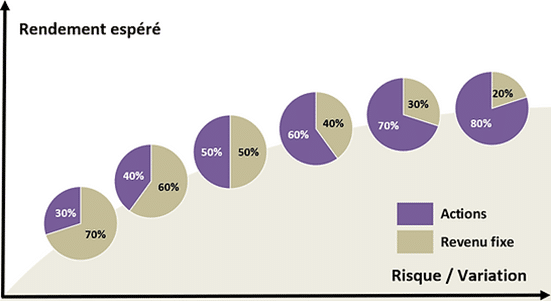
2. Allocate wisely between equities (for growth) and fixed-income securities (to reduce volatility).

The decision that typically has the greatest impact on an investor’s long-term results is not the selection of individual investments. It is the allocation between growth and conservative assets.

Growth assets, primarily equities, offer greater return potential but also come with higher volatility. Conservative assets, primarily bonds, help provide stability within the portfolio. Striking the right balance depends on several factors:

  • your financial goals
  • your tolerance for risk
  • your professional circumstances
  • your other assets and financial commitments
  • how you respond to market fluctuations

Because these factors evolve over time, your asset allocation should be reviewed periodically to ensure it remains aligned with your circumstances and objectives.

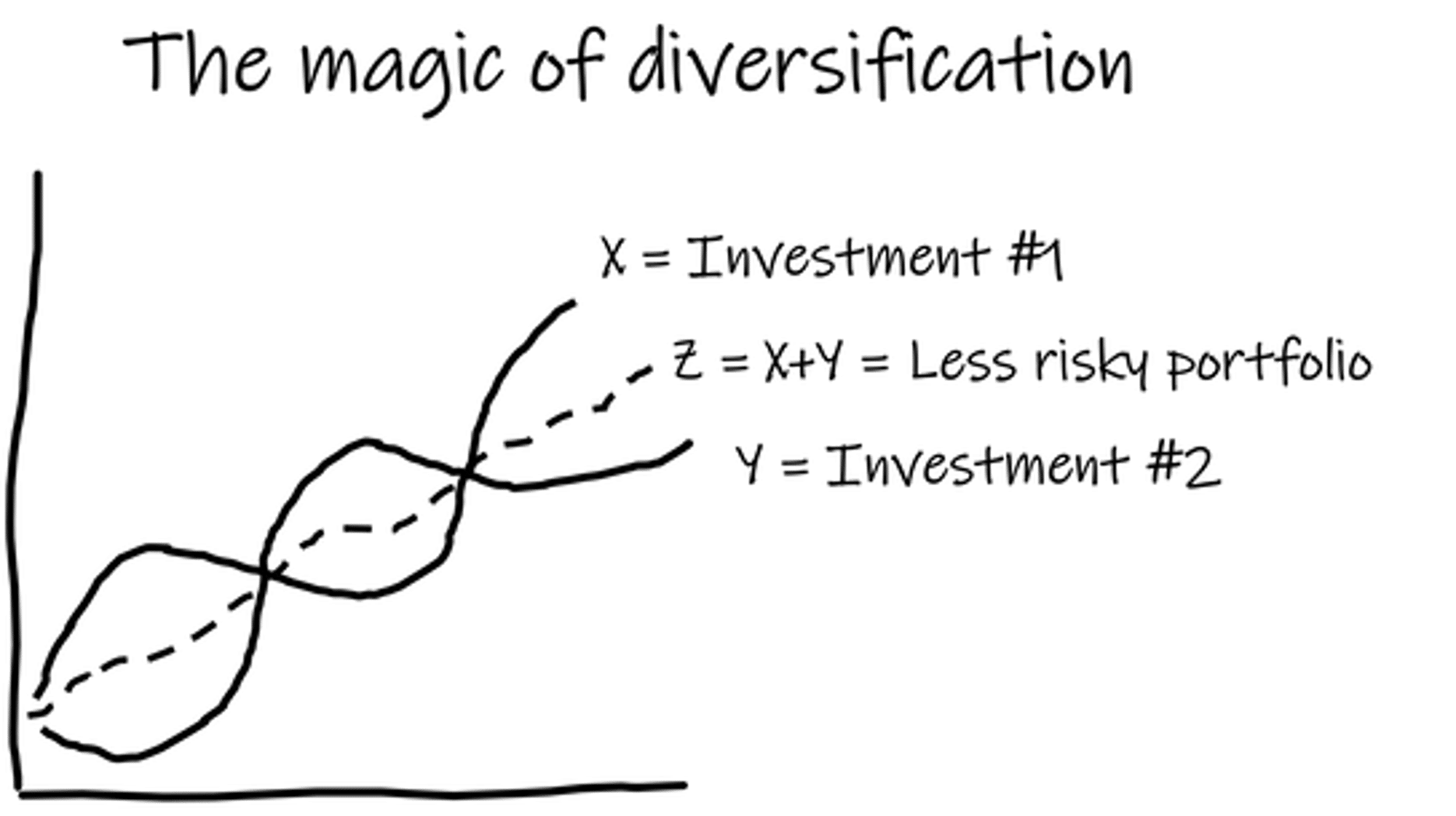
3. Diversify appropriately. No unnecessary big bets.

No one can predict with certainty:

  • which company
  • which region of the world
  • which asset class will perform best in the years ahead

Diversification is designed to reduce the impact of that uncertainty.

Our portfolios are therefore diversified:

  • Across asset classes: Canadian, U.S. and international equities, developed and emerging markets, government and corporate bonds, publicly traded real estate (REITs), preferred shares, and more.
  • Within each asset class: Each portfolio typically holds hundreds, and in some cases thousands, of securities through low-cost ETFs.

This broad diversification helps reduce concentration risk and improve risk-adjusted returns.

4. Act strategically instead of trying to anticipate the markets.

Participating in rising markets while avoiding downturns is an appealing objective.

Unfortunately, research has repeatedly shown that reliably timing the market is virtually impossible.

Discipline therefore means:

  1. establishing an appropriate asset allocation
  2. maintaining that allocation over time

When market movements cause a portfolio to drift from its target structure, we rebalance strategically. This process restores the portfolio to its intended allocation while taking into account:

  • transaction costs
  • tax implications

Markets generally reward discipline and consistency far more than prediction.

5. Costs are important. Minimize fees and transactions.

Investing always involves costs:

  1. investment product fees
  2. advisory fees
  3. transaction costs

These costs reduce returns, which is why it is essential to understand them and minimize them whenever possible.

Investment product fees

  • Index ETFs generally have significantly lower fees than traditional mutual funds.
  • On average:
    • our clients’ portfolios: 0.20% to 0.30%
    • Canadian mutual fund average: 1.22% to 1.53%

  • On a $1 million portfolio, this can represent annual savings of approximately $7,000 to $12,500.

Sources:

  1. Questrade: Management Expense Ratio Explained
  2. Ratehub: What Is MER?
  3. RetireHappy: Mutual Funds and Fees

Advisory fees

  • Advisory fees represent the portion of total fees paid to the advisor and brokerage firm.
  • In Canada, they are generally around 1.30% for portfolios under $500,000* and typically decline as assets under management increase. By comparison, many mutual funds include a fixed fee of approximately 1% that does not decrease as the portfolio grows.
  • Within private wealth management, it is important to distinguish between two levels of service:
    • portfolio management, which focuses primarily on investments
    • wealth management, which also incorporates financial, tax, and strategic planning

  • A more comprehensive wealth management approach will generally carry higher fees, reflecting a broader and more structured level of advice and support.

Sources:

  1. * Combien devriez-vous payer en frais de gestion sur vos placements?, Journal de Montréal
  2. * PriceMetrix Annual Report: State of Wealth Management

Transaction costs

  • Every transaction involves a cost, whether explicit or implicit.
  • For this reason, we carefully evaluate every transaction to ensure that its expected benefits outweigh the associated costs.

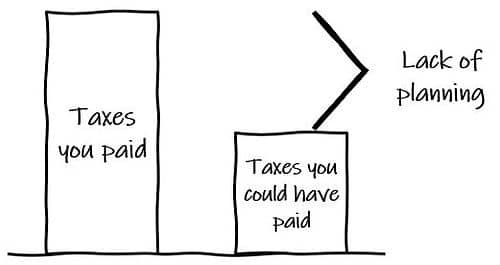
6. Taxes are important. Avoid paying them unnecessarily.

What ultimately matters is not the return you earn before tax, but what you keep after tax.

Several strategies can help improve tax efficiency:

  • making optimal use of registered accounts (RRSP, TFSA, RESP, FHSA)
  • holding tax-efficient investments in non-registered accounts
  • taking advantage of the deductibility of certain investment management fees
  • strategically managing the realization of capital gains
  • harvesting capital losses during market downturns
  • avoiding unnecessary transactions

7. Simplicity is better (generally).

The financial industry is often more complex than it needs to be. We believe investors should:

  • understand what they own
  • know why they own it
  • clearly see how each investment fits within their overall strategy

In practice, this often means:

  • Fewer accounts: Too many accounts can make a portfolio harder to manage and create unnecessary complexity.
  • Fewer investments: True diversification depends not on the number of funds held, but on the underlying assets they contain.

A simpler portfolio is generally:

  • easier to understand
  • easier to manage
  • often less costly

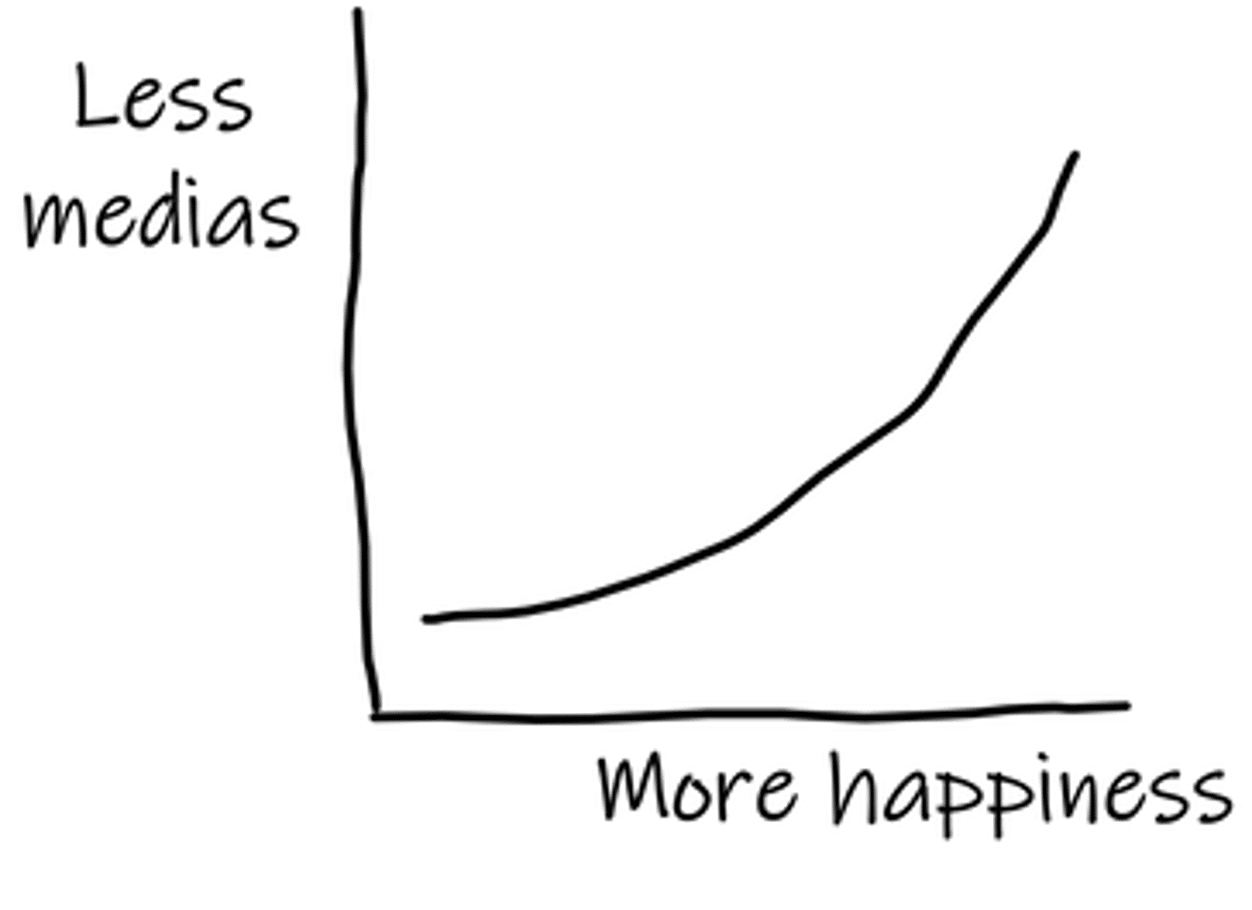
8. Ignore distractions and let the markets work for you!

If asset allocation between equities and fixed income is the most important driver of investment returns, patience is likely a close second.

Investors are constantly surrounded by a flood of information:
  • alarming headlines
  • predictions from so-called experts
  • advice from well-informed friends

Much of this information is simply market noise rather than meaningful insight. It tends to trigger two powerful emotions: fear and greed. Investors without a clear plan are particularly vulnerable to both.

Ignoring these distractions may sound simple in theory, but it is far more difficult in practice. Distinguishing meaningful information from market noise can also be challenging, especially when emotions begin to influence decision-making.

Having a trusted financial partner who understands the strategy in place can help investors better interpret and respond to the constant flow of information. A well-constructed and well-managed investment plan provides the discipline needed to stay the course and allow time and the markets to do their work.

Markets are unpredictable. Investment discipline is not.

Decades of academic research have clearly identified the principles that give investors the greatest likelihood of long-term success. Applying those principles consistently, however, requires rigor, discipline, and expertise.

That is the discipline we bring to portfolio construction: building resilient portfolios grounded in sound principles, guided by a coherent strategy, and designed to navigate changing market cycles.

You may also be interested in

Investment Comittee

The role of our investment committee

With thousands of investment products available, every decision deserves more than a single opinion. Our Investment Committee brings together experienced professionals who carefully analyze, challenge, and oversee the selection of the investments used in our clients’ portfolios.

Learn More
What is Index-based Management Plus ?

What is Index-based Management Plus ?

Index investing is widely recognized for its efficiency. After more than 20 years of applying this approach, we have refined our methodology and developed Index-based Management Plus: an approach that builds on the strengths of index investing while adding an additional layer of optimization.

Learn More

Personal guidance.

Independent advice.

Results that speak for themselves.

Research

Privacy Overview

This website uses cookies so that we can provide you with the best user experience possible. Cookie information is stored in your browser and performs functions such as recognising you when you return to our website and helping our team to understand which sections of the website you find most interesting and useful.